Key Takeaways
- IATA DGR vs. IMDG Code: IATA DGR governs air freight dangerous goods, whereas the IMO IMDG Code governs ocean freight dangerous goods.
- UN3480 (Class 9 Lithium-Ion Batteries): Requires an SDS, UN38.3 Test Summary, a maximum 30% State of Charge (SoC) for air transport, and Cargo Aircraft Only (CAO) handling.
- UN2794 (Class 8 Wet Acid Batteries): Classified under Class 8 Corrosives (Batteries, wet, filled with acid), requiring leak-proof UN-compliant packaging and terminal short-circuit protection.
- Liquid Chemicals & LN2 Transport: Regulated chemicals entering Thailand require Department of Industrial Works (DIW) Hazardous Substance notifications via NSW; absorbed LN2 dry shippers meeting IATA Special Provision A152 are exempt from Class 2.2 restrictions.
1. Overview of the 9 Dangerous Goods (DG) Classes
Both the UN Model Regulations and IATA DGR classify dangerous goods into 9 hazard classes: Class 1 Explosives, Class 2 Gases (including refrigerated liquid nitrogen UN1977 under Class 2.2), Class 3 Flammable Liquids, Class 4 Flammable Solids, Class 5 Oxidizers & Organic Peroxides, Class 6 Toxic & Infectious Substances, Class 7 Radioactive Material, Class 8 Corrosives (e.g., UN2794), and Class 9 Miscellaneous Dangerous Goods (e.g., UN3480).
2. Shipping UN3480 Lithium-Ion Batteries vs. UN2794 Wet Acid Batteries
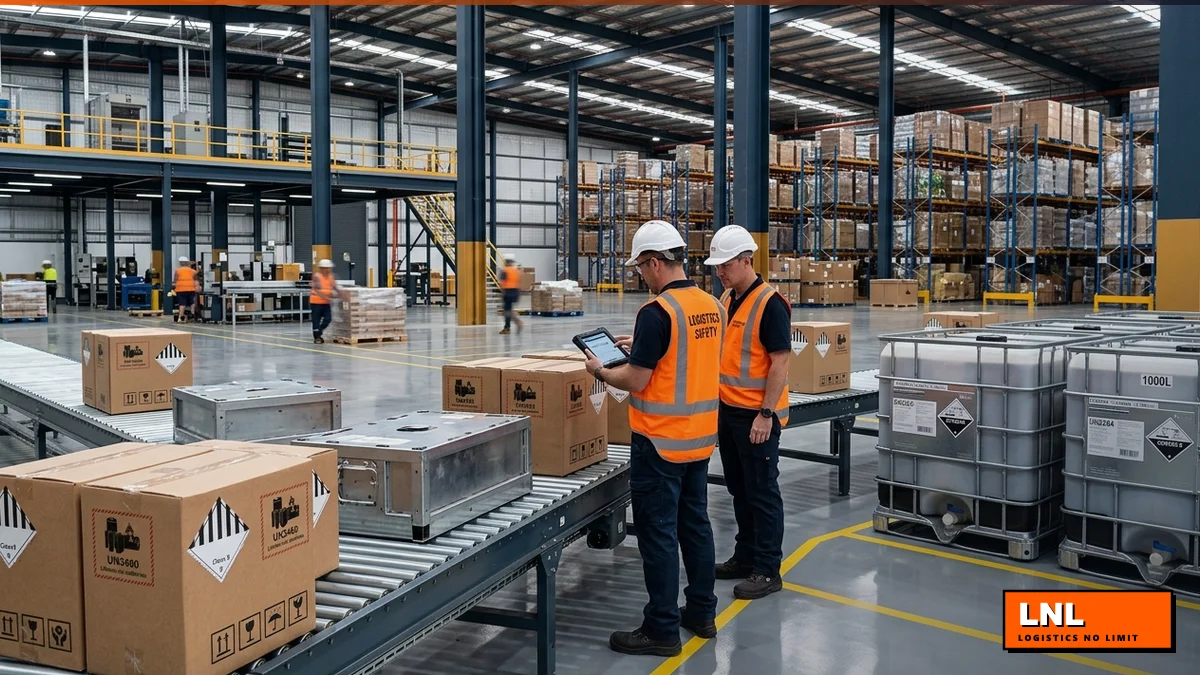
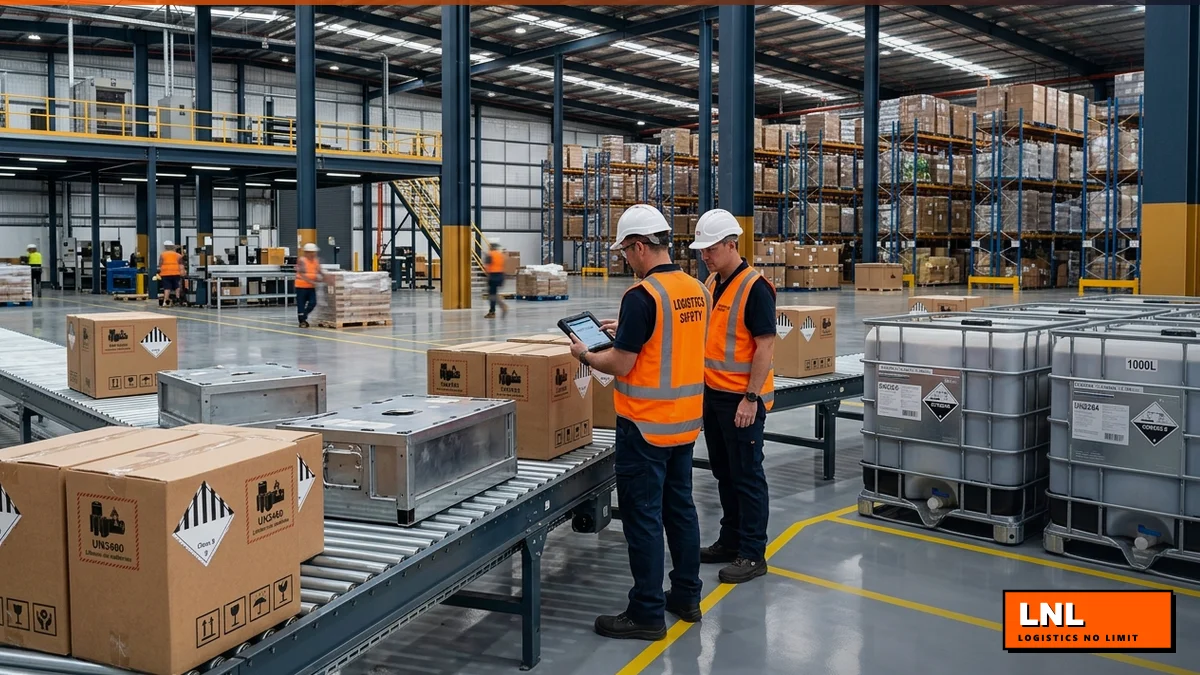
- UN3480 (Lithium ion batteries shipped standalone): Assigned to Class 9. Air shipments are forbidden on passenger aircraft, must travel under Cargo Aircraft Only (CAO) Packing Instruction 965 with State of Charge (SoC) ≤ 30%, and require a valid UN38.3 test summary and SDS.
- UN2794 (Batteries, wet, filled with acid): Assigned to Class 8 Corrosives. Must comply with Packing Instruction 870 (air) or IMDG provisions (sea) to prevent acid leakage and short circuits.
Looking for Hassle-Free Logistics? Choose LOGISTICS NO LIMIT CO., LTD.!
We specialize in cross-border trucking, customs clearance, and global supply chain management. Secure, compliant, and tracked in real-time.
Contact Our Experts Now3. International Transport of Liquid Chemicals & Liquid Nitrogen (LN2)
Bulk and packaged liquid chemicals are transported internationally in ISO Tanks, IBC Totes, or UN-certified drums accompanied by a 16-section Safety Data Sheet (SDS) and Dangerous Goods Declaration. In Thailand, importers must verify whether the chemical CAS number is listed under the Hazardous Substance Act administered by the Department of Industrial Works (DIW) and file the required NSW notification before customs clearance.
For cryogenic biological shipments using liquid nitrogen (LN2), free liquid nitrogen is regulated as UN1977 (Class 2.2), whereas fully absorbed insulated Dry Shippers containing no free liquid nitrogen qualify under IATA DGR Special Provision A152.
Official Sources: IATA Dangerous Goods Regulations (iata.org), IMO IMDG Code, and Department of Industrial Works, Thailand (diw.go.th).
Need Support with Chemical / DG Customs Clearance & Freight?
Logistics No Limit (LNL) assists importers and exporters with SDS/DG documentation checks, DIW NSW hazardous substance notifications, and international freight forwarding.
Contact Our TeamIATA DGR (Dangerous Goods Regulations) is the global regulatory manual published by the International Air Transport Association governing the air transport of hazardous materials across 9 DG classes. Under these rules, UN3480 covers standalone lithium-ion batteries (Class 9), while UN2794 covers wet batteries filled with acid (Class 8 Corrosive).
Frequently Asked Questions
Q:What is UN3480 in dangerous goods shipping?
A:UN3480 is the UN identification number for standalone Lithium-ion batteries (Class 9 Miscellaneous Dangerous Goods). For air transport under IATA DGR, they must be shipped on Cargo Aircraft Only (CAO) at a State of Charge (SoC) not exceeding 30%.
Q:What hazard class is UN2794?
A:UN2794 covers 'Batteries, wet, filled with acid' (such as lead-acid batteries) and falls under Hazard Class 8 (Corrosive substances).
Q:How is liquid nitrogen (LN2) classified for air transport?
A:Free refrigerated liquid nitrogen is regulated under UN1977 (Class 2.2 Non-flammable, non-toxic gas). However, insulated Dry Shippers in which all liquid nitrogen is fully absorbed into a porous medium are not subject to IATA DGR restrictions under Special Provision A152.