
Key Takeaways
- Section 202: Authorizes customs officers to enter business offices, warehouses, or transport vehicles during business hours without a search warrant.
- Section 203: Grants power to issue written summons directing importers to submit accounting books, bank statements, and make copies of corporate data.
- 5-Year Retroactive Window: Corresponds with the statutory duty to preserve records, permitting customs audits to trace back 5 years.
- Tax Adjustment Surcharges: Finding underpaid duty incurs a monthly interest surcharge of 1% and administrative fines of 1 to 2 times the duty gap.
Premises Inspection Powers Under Section 202
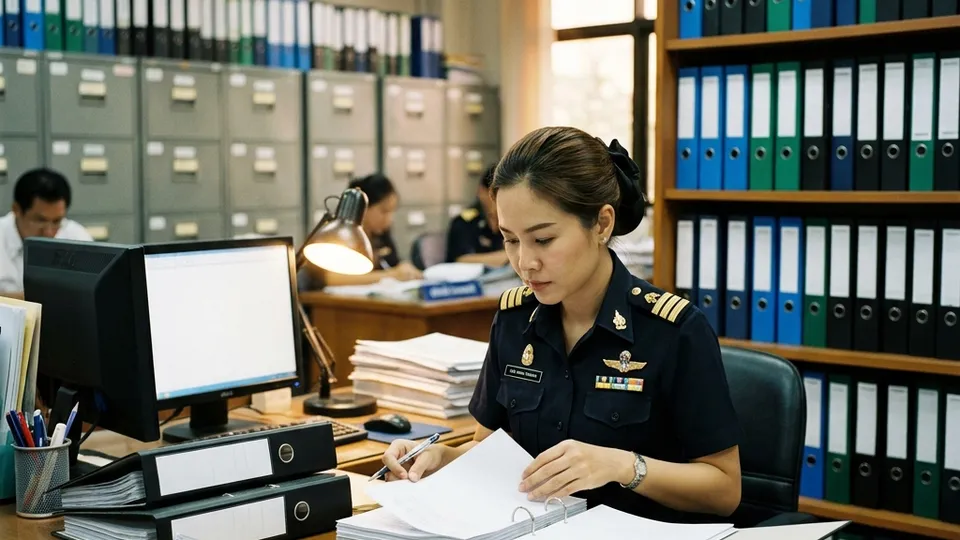
Section 202 of the Customs Act B.E. 2560 provides the legal authority for customs officers to enter the business locations of importers, exporters, or customs brokers during operational hours to audit ledgers, commercial documents, and check remaining in-stock goods. This statutory search power does not require a judicial warrant when executed during official business hours, and operators must facilitate access to corporate records.
Document Summons Powers Under Section 203
Under Section 203, customs audit officers hold the authority to issue written orders demanding that the importer of record or related parties surrender corporate files, accounts, and bank receipts necessary to prove declaration compliance. They can also summon directors or staff for formal interviews. Refusal to comply or obstructing officers is a punishable offense and can lead to allegations of fraudulent duty evasion.
Looking for Hassle-Free Logistics? Choose LOGISTICS NO LIMIT CO., LTD.!
We specialize in cross-border trucking, customs clearance, and global supply chain management. Secure, compliant, and tracked in real-time.
Contact Our Experts NowStrategic Preparation for Post-Clearance Audits (PCA)
To mitigate the risk of catastrophic retroactive tax adjustments, businesses must establish robust internal controls: 1. Systematically archive all customs files, shipping folders, and corresponding bank transfer receipts for 5 years. 2. Conduct annual self-audits of HS codes and transaction prices with external customs compliance specialists. 3. Utilize the Voluntary Disclosure Program if errors are identified, securing massive reductions or waivers of penalty fines by proactively declaring shortfalls.
Official Reference Agencies and Regulations
- Thai Customs Department: Statutory sections on importer liabilities and criminal penalties under the Customs Act B.E. 2560.
- Ministry of Finance & Appeals Committee: Ministerial decrees on customs valuation and formal tax appeal tribunal procedures.
Post Clearance Audit (PCA) is a retroactive compliance assessment conducted at the importer's premises by customs officers under Sections 202 and 203 of the Customs Act B.E. 2560. Auditors verify declaration accuracy regarding valuation, HS codes, and permits for up to 5 years, with the power to inspect all financial accounts and physical warehouse stocks.
Frequently Asked Questions
Q:Does customs notify businesses before conducting a PCA site visit?
A:In routine audits, the Customs Department sends an official written notification letter in advance to allow record preparation. However, in suspected fraud cases, unannounced visits may occur.
Q:Can we appeal if we disagree with a retroactive tax assessment?
A:Yes, the importer has the right to file an official appeal with the Customs Board of Appeal within 30 days of receiving the official notice of assessment.