
Key Takeaways
- Track updates in the e-Matching communication protocols at major sea customs houses.
- Ensure container transition documentation aligns perfectly with the sea manifest filed by the carrier.
- Adopt corporate paperless document archives to store clearance transcripts.
- Work with your broker to monitor container statuses using seaport online tracking systems.
Benefits of Digital Clearance and Manifest Matching
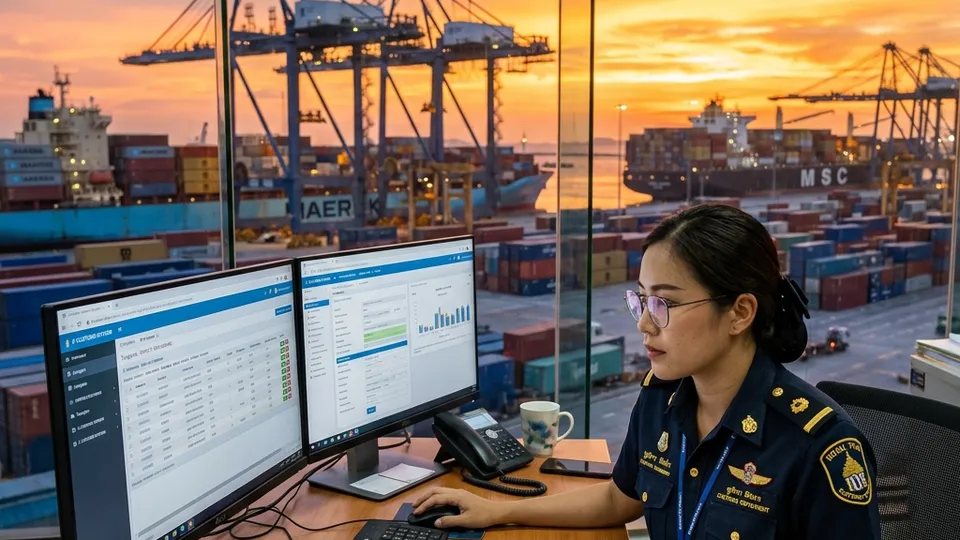
The e-Matching engine automatically pairs import declarations with vessel manifests submitted by shipping lines. Registering as a paperless importer ensures that your declaration details are processed and cleared via the central customs server, significantly reducing port wait times for green channel containers.
Resolving Data Mismatches in Digital Systems
If declaration details mismatch the carrier's sea manifest, the system triggers a validation error, delaying release. Importers must quickly notify their broker to align container numbers or weights in the shipping line's database, resubmitting data for e-Matching.
Looking for Hassle-Free Logistics? Choose LOGISTICS NO LIMIT CO., LTD.!
We specialize in cross-border trucking, customs clearance, and global supply chain management. Secure, compliant, and tracked in real-time.
Contact Our Experts NowOfficial Reference Agencies and Regulations
- Thai Customs Department: Latest customs decrees, notifications, and cargo release facilitation measures at border entry points.
- Ministry of Finance & WCO: Annual custom tariff rate revisions and international customs supply chain safety guidelines (SAFE Framework of Standards).
Upgrades to digital customs services and automated container matching protocols (e-Matching/Sea Manifest) at major seaports (e.g., Laem Chabang and Bangkok Port) enable importers and exporters to clear Green Line cargo automatically without visiting inspectors, cutting port handling times and boosting maritime transport efficiency.
Frequently Asked Questions
Q:Does the e-Matching system experience frequent downtime, and what is the backup plan?
A:Digital customs servers employ redundant hardware for rapid recovery. However, in technical emergencies, brokers can file manual release requests directly at the port clearance office.